
Designing storage that truly works for a unit starts with watching how people move, not staring at a floorplan or inventory: they only tell part of the story. When you walk a unit with nurses or watch how hospital staff interact with materials, taking items from shelves and putting them on (which is often overlooked!), you quickly see that the real cost of poor storage is not just clutter, but seconds lost to reaching, bending, and hunting for the right item at the wrong time.
Start with a Little Show & Tell
The most useful “assessment tool” is a slow walk through the unit during a normal shift. Ask staff to show where they actually grab the top 10 items they use most in a typical hour, and importantly, make sure to ask where they place items onto shelves, not where those items are supposed to live. Make sure to ask how items are being transported between locations, and listen for phrases like “I always have to go back down there for…” or “We usually stash a few over here just in case.” Those are clues that the current storage layout is fighting reality, not supporting it. This is how we uncover that there’s a meaningful impact that can be made.
Never Endorse the Hunt
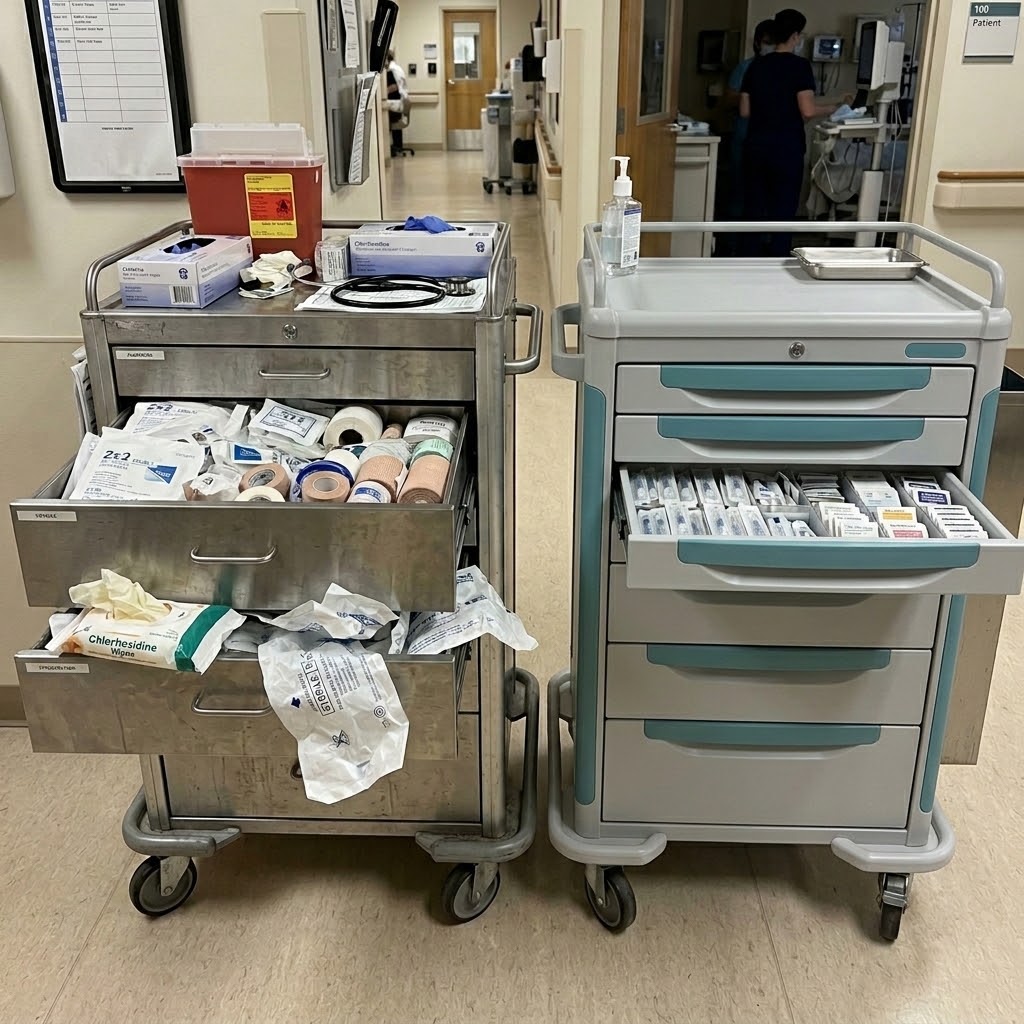
As you walk, pay attention to three things: reach, bend, and hunt. Reach is anything above shoulder height, far into the back of a deep shelf, or areas obscured by equipment or other shelves. Bend is repeated stooping for high use items stored too low. Hunt is scanning multiple bins or opening and closing drawers to find the right size or SKU. Each of these adds invisible friction to the day and, over time, contributes to fatigue and errors. And it’s always important to consider that different people have different heights, so the impact of these factors can vary for each individual.
Keep it in the Strike Zone
Once you have seen how people actually move through a space, you can start shaping storage around their work, instead of squeezing everything into whatever shelves or carts happened to be there. High velocity items belong in the strike zone from about mid thigh to shoulder height, where staff can grab them quickly without extra bending or reaching. Slower moving or bulk supplies can live higher or lower, as long as no one is constantly fishing for them in the back corner of a cabinet.
Remember Your Modesty
Often the best changes can be modest: adding one more shelf in unused vertical space, moving a frequently used item out of a deep cabinet to a shallow cart, or grouping related supplies so nurses are not zigzagging between rooms to assemble a basic tray. Prototype one bay or one cart at a time, then come back a week later and ask staff what still feels awkward. Their feedback will tell you where to tweak spacing, clear colour-coded labels, or product locations.
Gravity is a Constant
The way a unit works will shift with new protocols, seasonal surges, and staffing changes. It can even shift as products change over time (as contracts and requirements change), and as packaging shapes and sizes change. Storage that was perfect last year can become a daily annoyance without anyone quite noticing. Periodically walking the unit, watching how people move, and adjusting layouts accordingly can turn storage design from a one time project into a continuous, low level improvement loop. Fit the storage to the inventory and the people, and you get quieter hallways, fewer workarounds, and more time going to actual patient care instead of the daily scavenger hunt.
Not sure where to start or need some help? Contact us to learn more about our Design Consultation services.