This is a post from Forsyth Director Shad Forsyth. Check out his LinkedIn for more.
The Scene
We were recently called in by a client after they noticed the shelves on a cart sagging slightly under stacks of IV solutions and equipment. Their concern was straightforward. Were the shelves starting to fail?
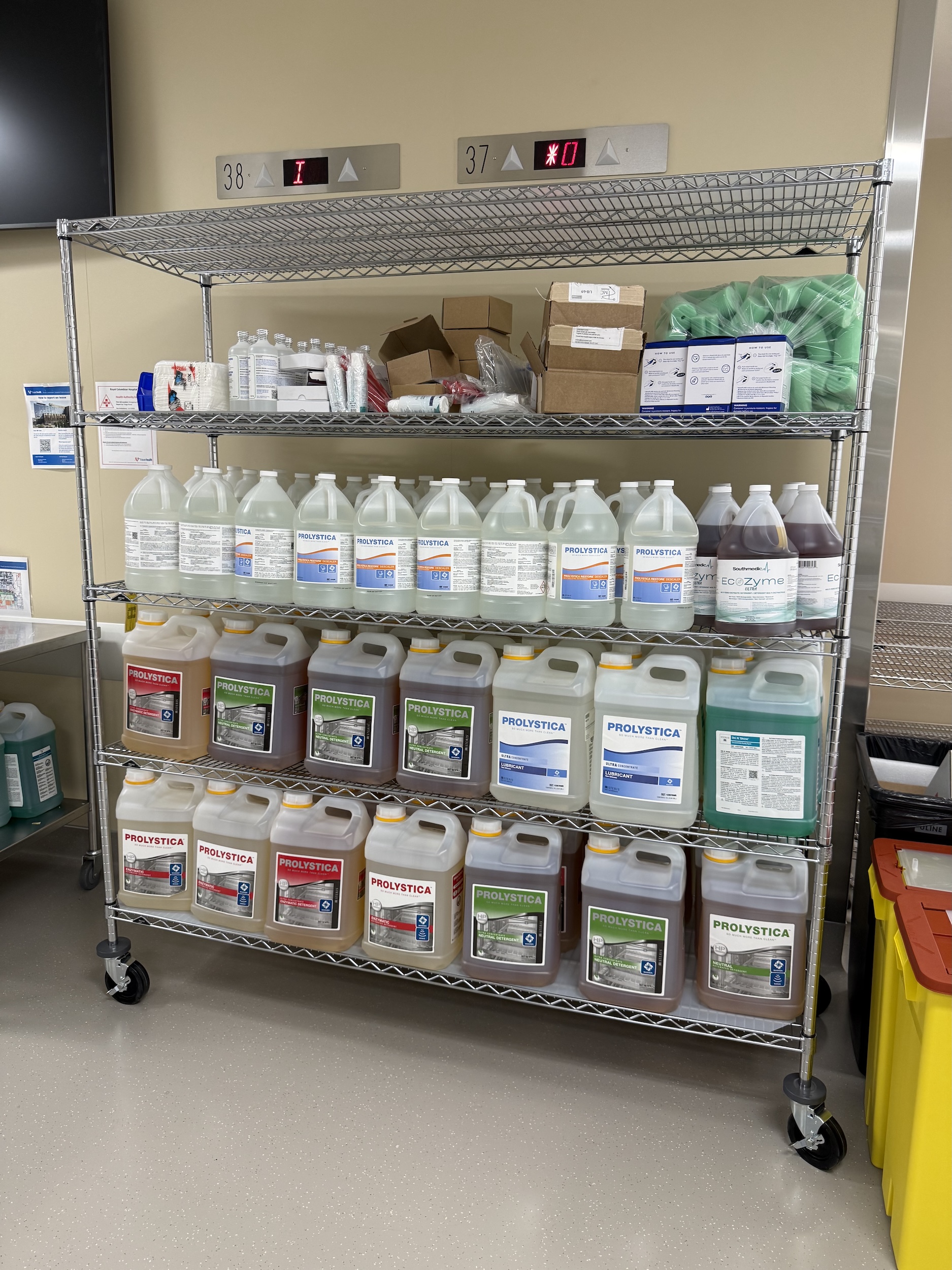
Each of those jugs weighs 12.57 pounds. I counted 45 jugs per shelf. That is 566 pounds on a single level. This particular brand and size of shelf is rated for up to 600 pounds, so on its own, that shelf is technically within spec. Now multiply that across three shelves. That cart is carrying close to 1,700 pounds.
A cart’s overall weight capacity is determined by a combination of factors. Often, the weight capacity of the casters gets overlooked.
How Weight Ratings Actually Work
Shelf capacity
This is the maximum weight a single shelf can support when properly installed and evenly loaded.
Caster capacity
This is the maximum weight a single caster can support. And this is where the real math begins.
The Rule of Three
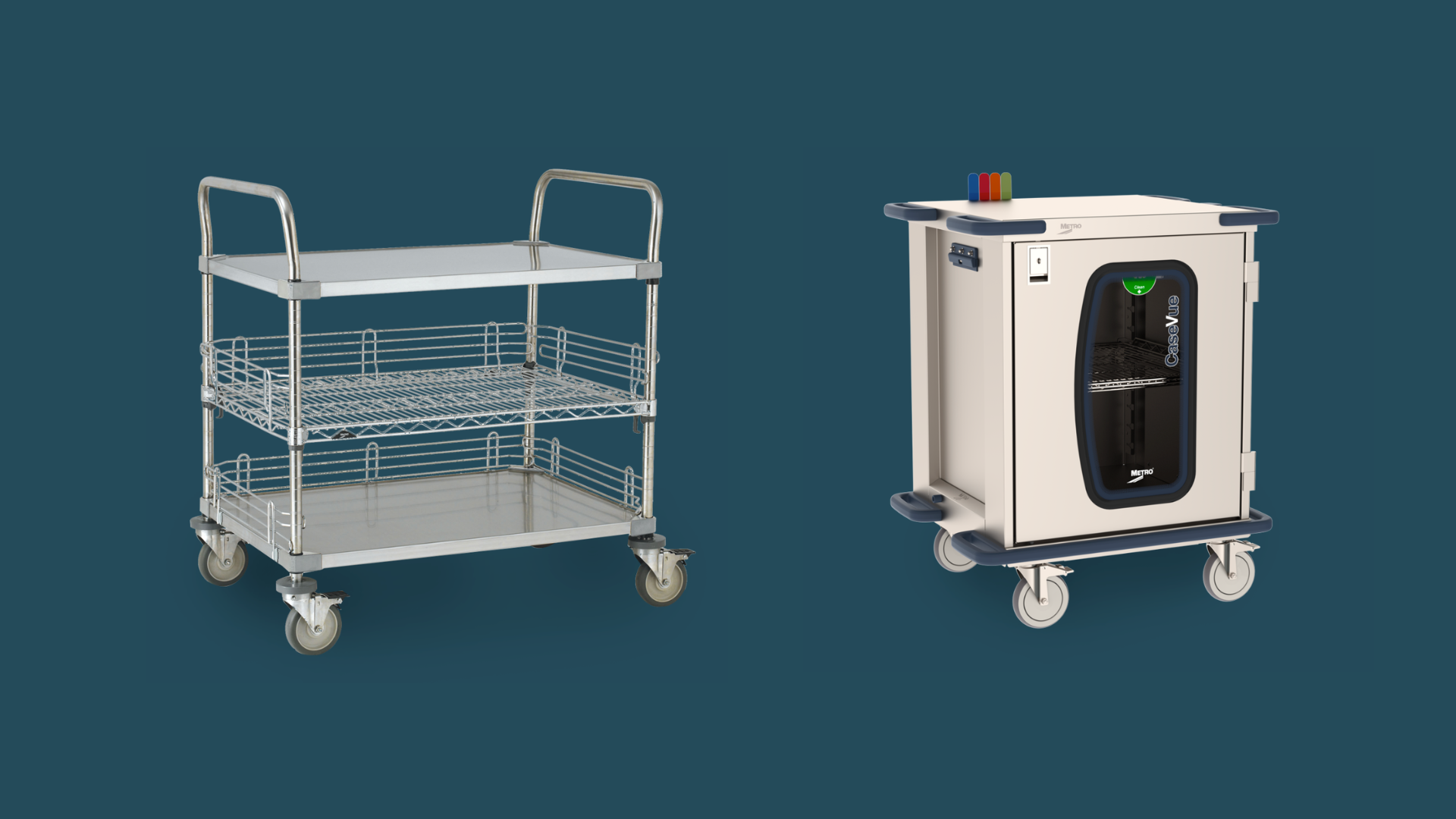
Many wire shelving manufacturers simply total the rating of all four casters and call that the cart capacity. Some manufacturers take a more conservative approach. For example, Metro builds in a margin of safety and rates carts based on three casters instead of four. A cart with 300 pound casters is rated at 900 pounds, not 1,200.
It may look like a small difference on paper. In practice, it reflects how carts are actually used in busy healthcare environments. It is also the kind of detail we pay attention to when selecting brands for our clients.
What Happens When a Caster Fails?
When a caster fails, product can fall off the cart and get damaged. That often means replacing inventory that should have been protected in the first place. Overloaded carts or poorly distributed weight can also damage floors. We have seen casters dig in and leave marks along hospital corridors. There is a staff safety factor as well. If a caster fails while a cart is in motion, there is real risk of injury. Even pushing carts with undersized or marginal casters increases strain and the likelihood of someone getting hurt.
Getting the casters right from the start lowers your overall cost of ownership.
A Quick Checklist for Procurement and Planners
Before you specify or purchase your next cart, ask a few simple questions:
- What are you actually storing on the cart? IV fluids, other liquids, and even kitchen supplies add up quickly and are heavier than most people expect.
- How many shelves will be fully loaded? That affects weight distribution and what the cart truly needs to support.
- Will this cart stay in place, or will it move regularly beyond periodic cleaning?
- If it moves frequently, how far does it travel? What types of flooring does it cross? Are there thresholds or gaps along the route?
These details matter.
Closing
In the case of the cart in the photo, the solution was straightforward. The larger cart was repurposed and the IV jugs were redistributed across two smaller carts. By reducing the overall width and spreading the load, we brought each cart back within its rated weight capacity.
Same product. Same space. Just applied differently.
There are other options as well. Dolly bases can sometimes make sense depending on how the product is stored and moved. That is likely a topic for another post.
At Forsyth Healthcare, we do more than supply carts. We help you choose the right solution based on how your teams actually work. Sometimes that means recommending a simpler option. Other times it means upgrading specifications to prevent failures and added costs down the road.
If you are planning mobile storage or carts in BC or Western Canada and want clarity instead of guesswork, let’s talk.