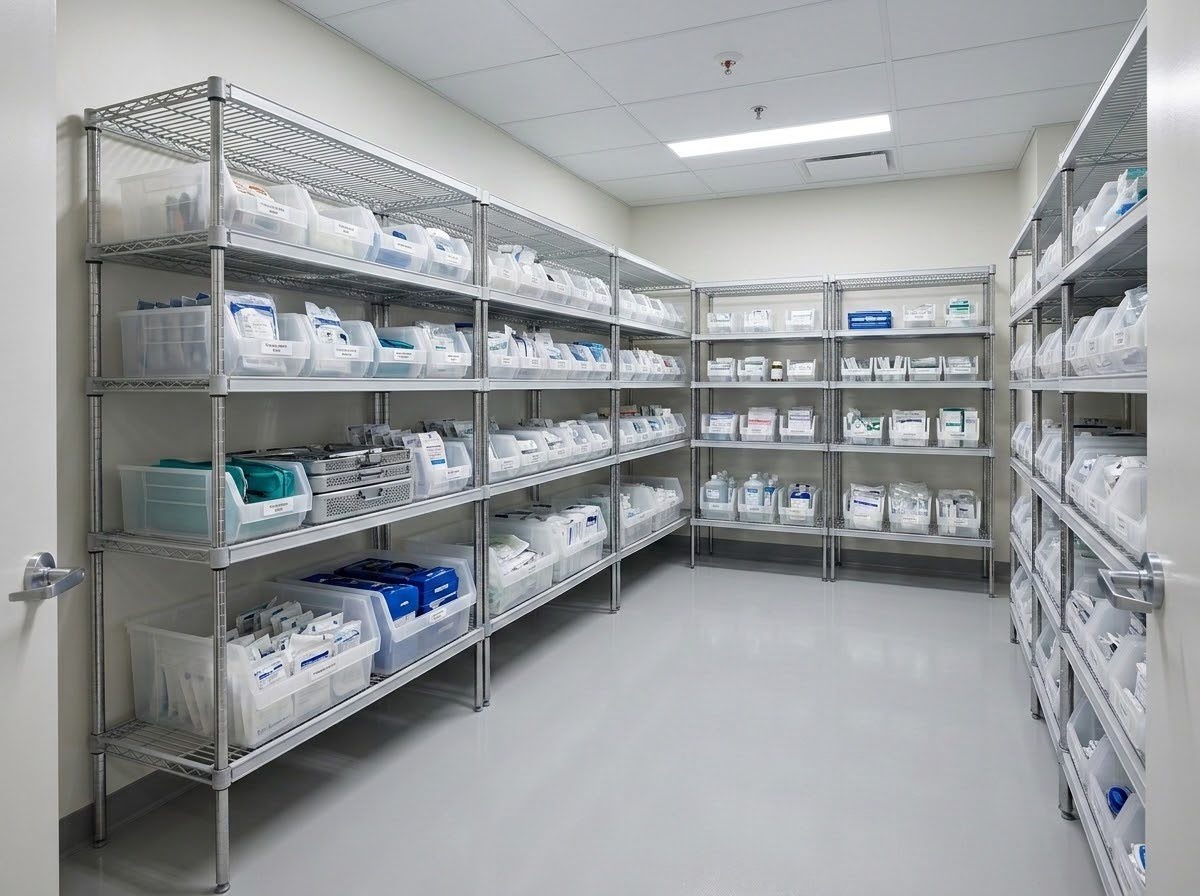

It’s tempting to treat supply bins as an afterthought; just one more container in a busy hospital landscape. But in healthcare, details matter. When plastic supply bins aren’t properly cleaned, the risks and repercussions echo through patient safety, workflow, and regulatory compliance.
Although we generally believe that wire supply baskets are preferred in many scenarios when compared to plastic bins (see our recent post, Why Supply Baskets Beat Plastic Bins Every Time), there’s plenty of scenarios where plastic bins are needed.
For when those scenarios arise, here’s what you need to keep in mind:
Infection Risk & Contamination
Plastic bins can trap dust, bioburden, and spills, especially in corners, scratched surfaces, or under handles. If not cleaned thoroughly and on schedule, these bins become reservoirs for microbes. Even small lapses in cleaning allow contaminants to accumulate, increasing the likelihood of cross-contamination between supplies, staff, and ultimately, patients. CSA guidelines stress that totes and bins in sterile storage must be maintained in good repair and cleaned when visibly soiled, in accordance with the requirements for shelving. Crucially, policies and procedures for frequency and method of cleaning must be in place and followed.
Damage, Waste & Supply Disruption
Contaminated bins can render entire supply batches suspect, requiring additional cleaning, quarantine, or even disposal of expensive sterile stock. Damaged or soiled bins may also interfere with picking and rotation protocols, resulting in mispicks, delayed cases, or wasted supplies. The CSA standard is clear: all storage equipment, including bins, must be accessible for regular cleaning and in good repair. Failure to uphold this leads directly to operational slowdowns, cost implications, and unnecessary waste.
Regulatory & Safety Issues
As is probably clear already, inadequate cleaning isn’t just a housekeeping problem; it’s a compliance issue. Regulatory standards such as CSA require documented procedures for the cleaning and maintenance of all bins and totes, including clear schedules and responsibilities. Inspections can quickly uncover lapses, resulting in non-compliance citations, corrective action plans, and reputational risk. As noted in the guidelines, bins must be kept clean to maintain the integrity of stored medical devices, and any bin not meeting cleaning and repair standards can jeopardize the sterility of its contents.
The Bottom Line
When you don’t clean your plastic bins, the chain reaction is clear: heightened infection risk, wasted supplies, workflow bottlenecks, and regulatory headaches. Investing in proper cleaning not only protects patients, it protects your operation. Following detailed, CSA-guided cleaning protocols ensures that every supply delivered to the point of care is safe, reliable, and ready. In short: clean the bin, protect the patient, and keep the system running smoothly.