Most storage conversations start with carts and shelving. Rarely do they start with label holders or bins, but that’s usually where the real inefficiency lives.
Labels: more options than most teams realize
For wire carts and shelving, most people picture one style of label holder. In practice there are A LOT of variations, and the right pick changes how fast a supply room actually moves.
Wanzl’s 3-position label holder. Courtesy: Wanzl.
Wanzl has a great 3-position label holder that can slope up or down for where it is positioned on a cart. Hanging label holder tags are common on wire shelving and basket systems like Partition Wall, SmartCell, and qwikSIGHT. Color coding on these tags makes visual identification quick, which matters when someone’s grabbing supplies mid-shift and doesn’t have time to read fine print.
Within that category, there’s a tradeoff (because isn’t there always). Zap strap style holders need to be cut off to change, which slows updates but keeps things locked in place. Snap and release styles can be reused a handful of times before they wear out, trading some durability for flexibility. Neither one is universally better. The right choice depends on how often labels actually change in that space.
Shelf bins: where the gaps add up
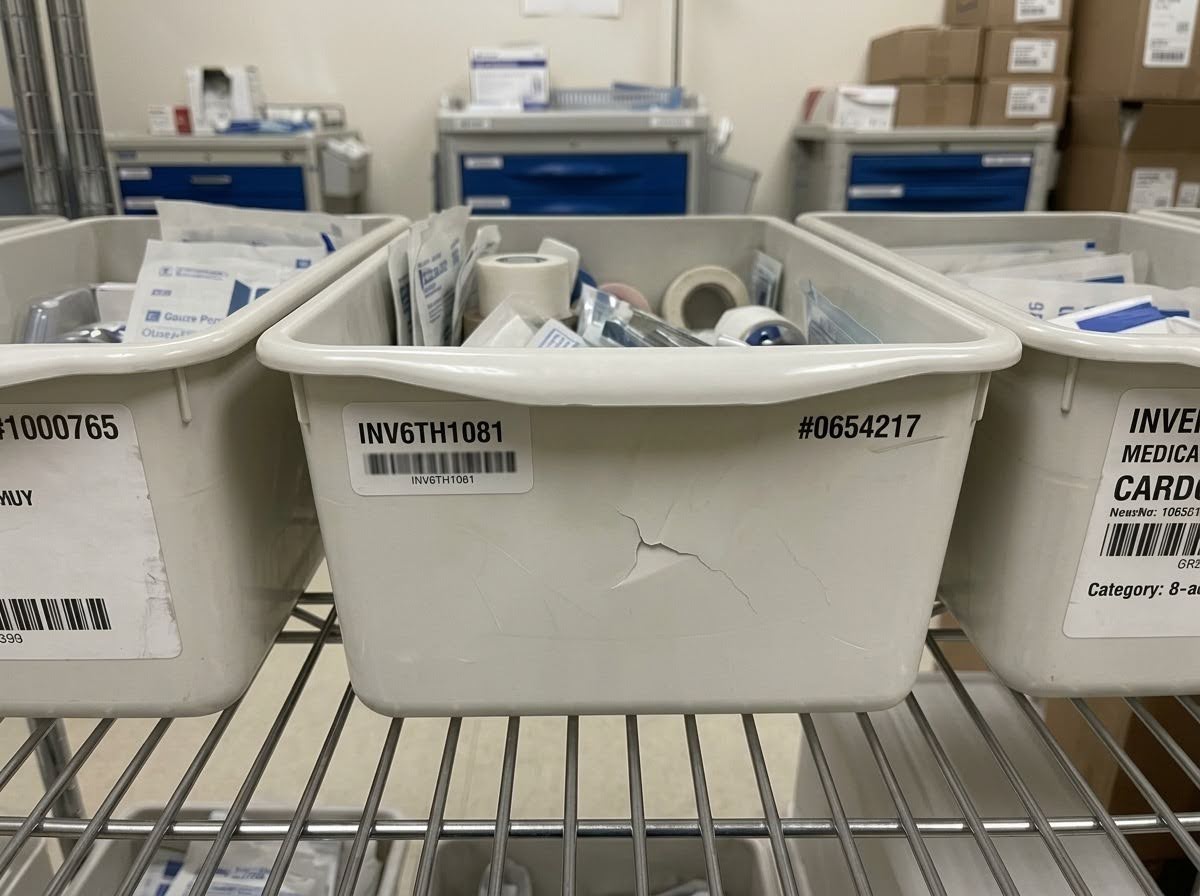
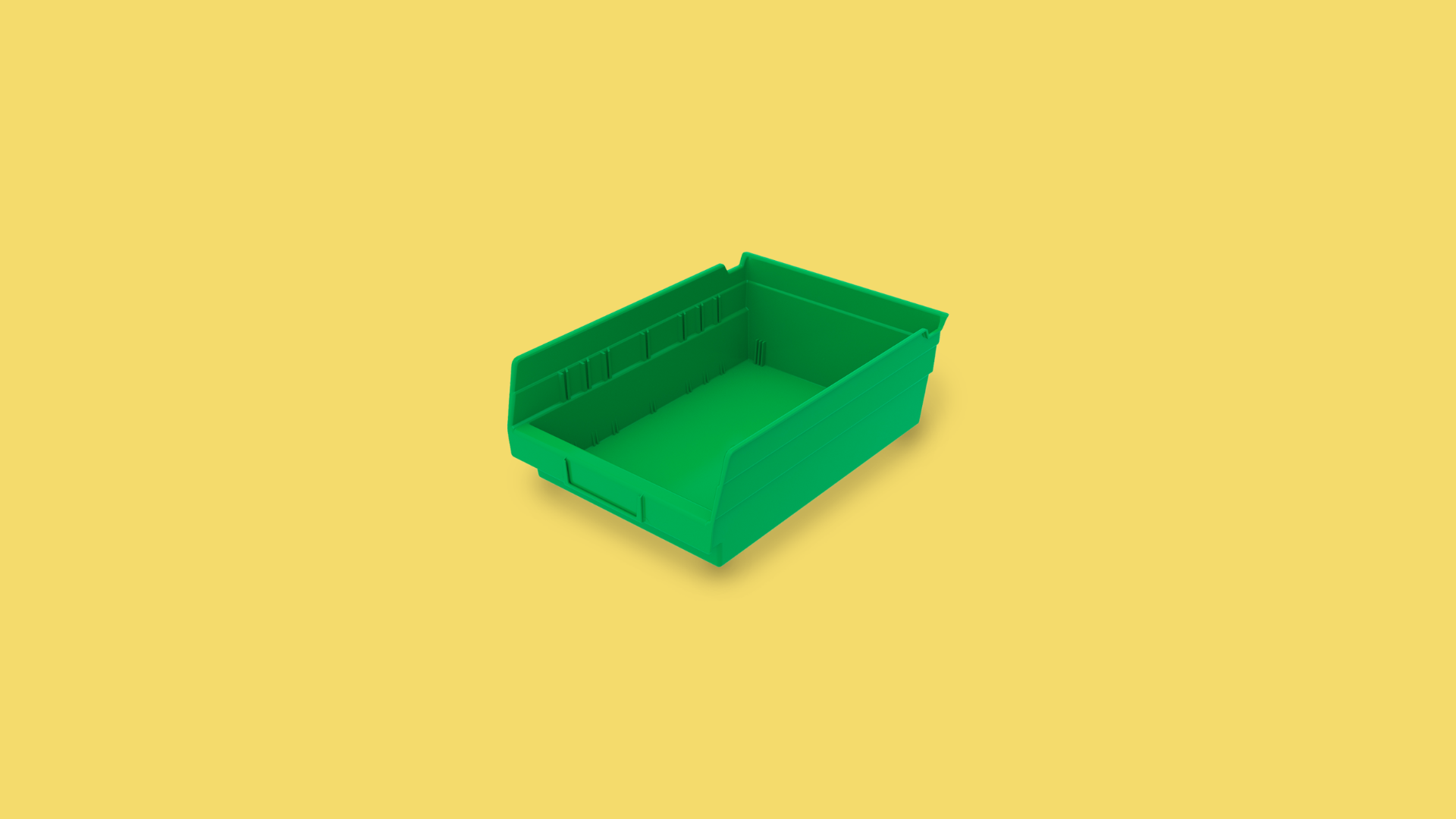
Storage bins get even less attention than labels, and that’s a mistake. Sizing bins to the actual depth and width of a shelf can make a meaningful difference in how much usable storage a room holds. Keep in mind when measuring that shelf bins still create about an inch of space between the interior walls of adjacent bins.
Hanging and stacking bins, the kind mounted to louvered panels, are common on wire shelving. They’re easy to install, but they also create real gaps between bins which can be close to 2”. Multiply that gap across an entire supply room and the lost space adds up fast.
Shelf bins sit differently. Sized correctly to the shelf itself, they close that gap and generally squeeze more usable storage out of the same footprint. It’s a small design decision that quietly compounds room by room.
Why this is worth a second look
As usual, none of this shows up on a floor plan. A drawing shows a shelf and a cart. It doesn’t show whether the bins on that shelf actually fit it, or whether the labels holding the system together were the right style for how often that unit restocks.
That’s the pattern we see again and again: the biggest wins in a storage room rarely come from the big-ticket items. They come from getting the small, unglamorous details right, the kind that never make it onto a spec sheet but show up every single shift.
Our take
If you’re planning a storage refresh, don’t stop at “what cart” or “what shelving.” Ask what labels and bins are going on that shelving, and whether they’re actually sized and styled for how your team works. Getting those details right is a small investment that pays off every time someone reaches for a supply without having to think about it.
If you want a second set of eyes on a room that already exists, or you’re speccing something new,
Forsyth can walk through the label and bin options that fit your space, not just the ones that came standard.