This is a guest post from Forsyth Director Shad Forsyth. See what else he has to say on LinkedIn.
Smaller drawer sizes.
Earlier in my career, I preached caution on this topic. If you picked a smaller footprint cart, I felt like I had to make sure the clinical team understood that it came with smaller drawers. I probably positioned that as a compromise you made in exchange for fitting into tight spaces.
Over the last 11 years, a lot of hallway conversations have changed my mind.
Smaller capacity is not always a compromise. Interior drawer sizes are still important, but the “bigger is better” assumption just doesn’t always survive contact with real workflows and real inventory.
Smaller drawers can actually support the way many teams want to work:
They discourage overstocking.
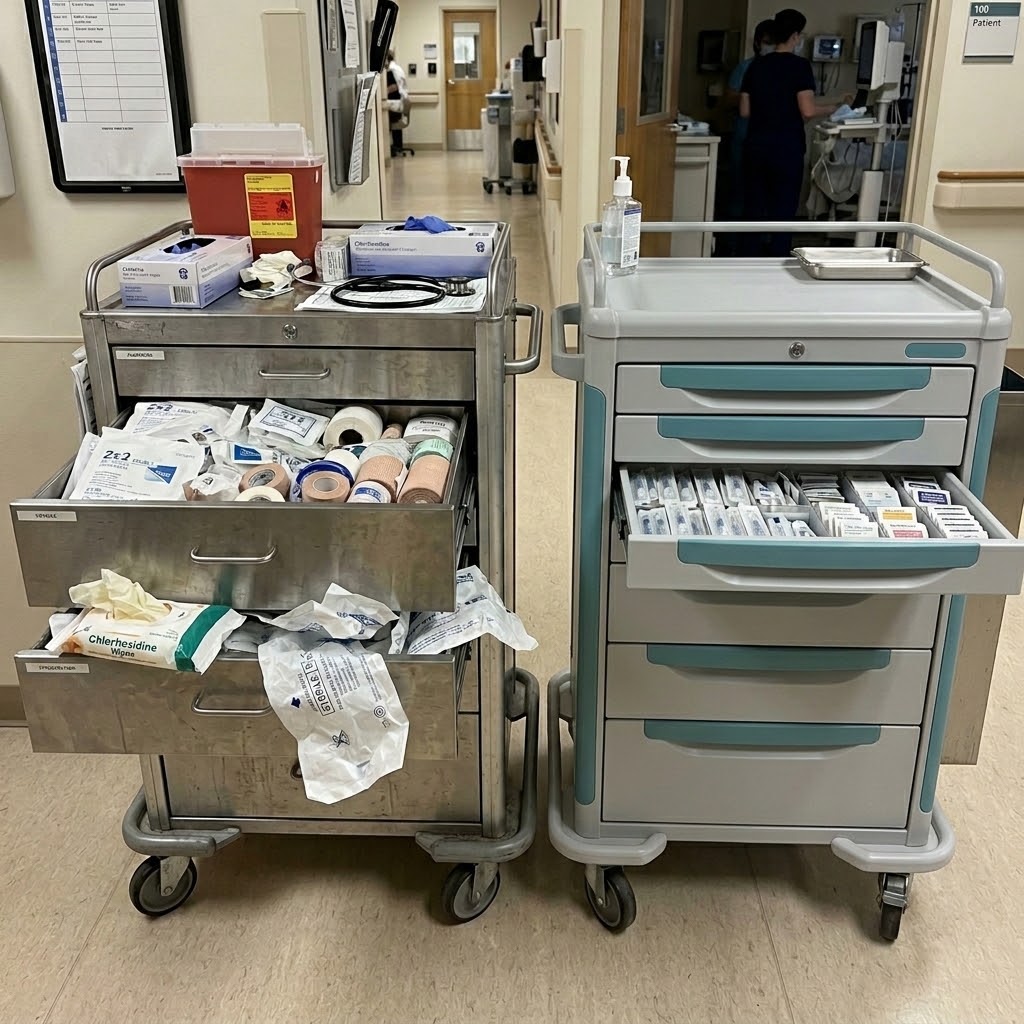
When a drawer is huge, it is very tempting to turn a procedure cart into a rolling bulk storage cabinet. A more modest drawer nudges you toward carrying what you actually need for the procedure, not a month’s worth of product.
They reduce contamination risk.
When too many supplies live right beside the point of care, more items are exposed to handling, splashes, airborne contamination, and repeated access by multiple staff. Limiting drawer capacity naturally limits how much “extra” stock is sitting in the splash zone.
They improve visibility and rotation.
Deep drawers are great places to lose things. If staff can’t see what’s at the back or on the bottom, you get duplicate stocking, expired product, and a lot of “open the new package because it is on top” behaviour while older stock sits untouched.
They can lower inventory costs.
Big drawers feel safe because they hold more. But “more” often means duplicate inventory spread across carts, more expired items, and more confusion about what needs to be replenished and when.
The goal shifts from maximum drawer space to the right drawer space, organized around the procedure, the staff workflow, infection control expectations, and the true cost of carrying inventory across every cart.
For me, this has been a good reminder of why it’s worth staying curious.
Every time I think I have a “rule” about carts or storage, a nurse, a tech, or a materials lead will say something that flips it on its head. Smaller drawers started as a compromise in my mind. Now, in the right context, they are one of the levers we can use to help teams work cleaner, leaner, and with less waste.
Stay curious my friends.