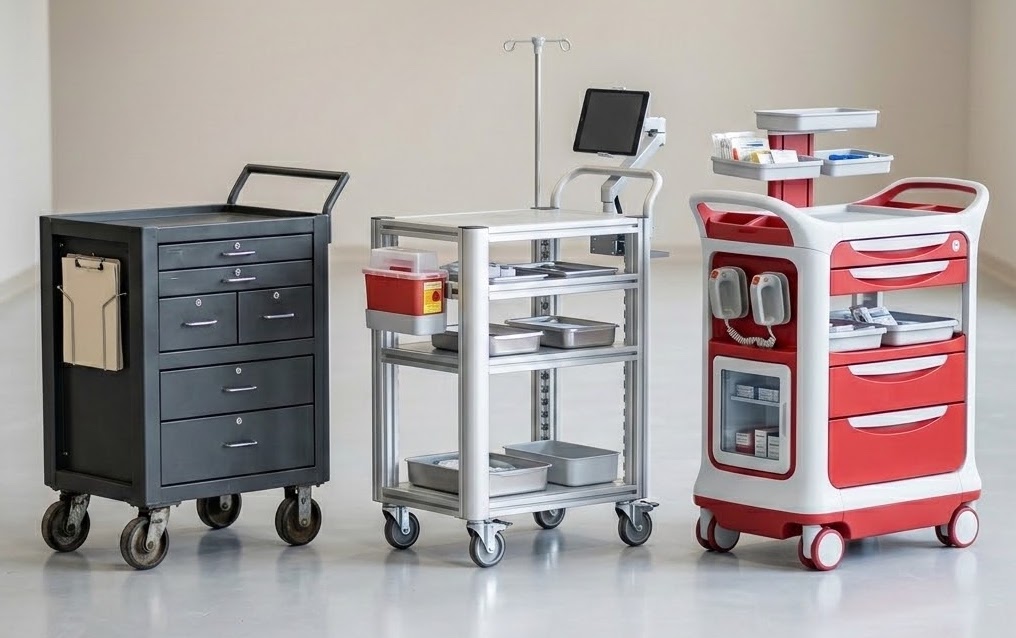
Procedure carts have changed a lot more than their drawer colours. They have quietly moved from heavy steel boxes to lighter aluminum frames and modern polymer and composite designs that are easier to push, easier to clean, and easier to live with in real clinical spaces.
Why cart materials matter
Every time a nurse moves a code cart, pulls an IV start cart into a tight room, or wheels a procedure cart down the hall, they feel the weight and design choices baked into that cart. Lighter materials reduce push and pull forces and make it easier to control a loaded cart around corners and over thresholds, which is especially important for carts that move many times in a shift. When you add up how often and how far a cart moves per day, those material choices start to show up as fatigue, strain, or the opposite: a cart that feels like it is actually helping.
From steel boxes to lighter frames
Steel carts earned their place because they are strong and familiar, but they also carry some baggage. They’re heavier to move, they chip and scratch over time, and they often rely on drilled holes for accessories, which introduces more edges and crevices to clean. In a modern clinical environment, a big painted steel box can also clash with lighter, more open architectural design, and once the finish starts to wear, the cart looks “tired” long before it stops working mechanically.
Aluminum offers a middle step: high strength with noticeably lower weight. That makes it a good fit for clinical carts that need to move frequently. Because aluminum carts are often designed from the start with integrated accessory channels, you can mount side rails, bins, and holders without drilling into the body of the cart, preserving the finish and making surfaces easier to wipe down.
Polymer and the rise of “cleanable” carts
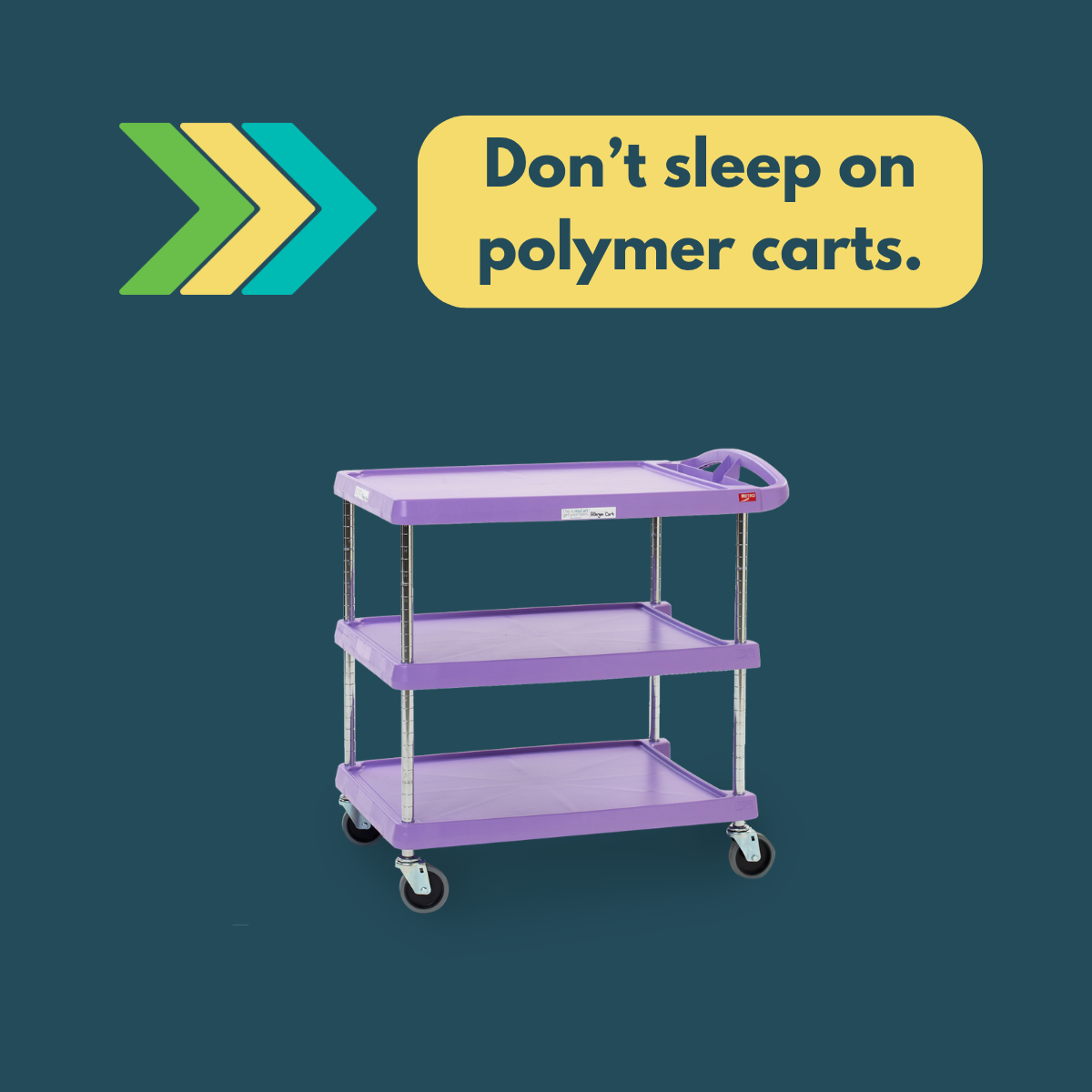
Polymer and composite carts take weight reduction and cleanability another step. These materials are lightweight, highly cleanable, and will not chip, dent, or scratch under normal use, which means they keep their “new” appearance much longer in busy units. For isolation carts and other infection‑sensitive applications, smooth polymer surfaces and rounded edges make it easier for environmental services to disinfect quickly and consistently between uses.
Not every polymer system is the same, though. Some still require tools or drilling to add accessories, while others are fully engineered around tool‑less clips and rails. Tool‑less systems shine when you have to reconfigure a cart frequently: switching from one isolation room layout to another, adding a new PPE item, or reorganizing side bins without calling in facilities.
Accessories and channels: easier to add, easier to clean
One of the quiet advantages of newer aluminum and polymer carts is how they handle accessories. Instead of treating every new bin or side basket as a mini construction project, most modern systems use built‑in channels and mounting points to accept accessories with simple hardware. InnerSpace, for example, engineered their accessory channels to be wider, allowing staff to wipe out those channels properly instead of fighting with narrow tracks and exposed screw heads. That combination of flexibility and cleanability matters over years of use, not just on day one.
Because accessories are easier to add and change, teams can treat carts as living tools that adapt with protocols and product changes. When a new dressing kit is introduced or the PPE assortment shifts, you can reconfigure drawers, add side bins, or adjust layout without putting the cart out of service for long or leaving behind a mish‑mash of extra holes.
Infection control and visual hygiene
Infection control teams pay attention to surfaces, seams, and the number of “touch points” that need to be wiped. Newer aluminum and polymer carts with smoother shells and integrated channels present fewer exposed edges and less chipped coating for microbes and grime to cling to, compared with older steel designs that have seen years of hard use. This is one reason Forsyth often points to polymer for isolation and high‑risk applications where cleanability is part of the product brief, not an afterthought.
There is also an element of visual hygiene. Carts that hold their colour, resist dents, and avoid rust spots keep clinical spaces looking cleaner and more modern. That might sound cosmetic, but staff and patients alike notice when equipment looks like it belongs in the current build, not a previous decade.
Fit for modern healthcare environments
Modern hospitals and clinics invest heavily in calming, light‑filled environments. In that context, a bulky, dark steel cart can feel out of place. Aluminum and polymer carts with cleaner lines, integrated handles, and coordinated colours align better with contemporary healthcare design, both in public‑facing areas and in back‑of‑house storage where staff spend a lot of time.
At the same time, lighter materials mean carts are more likely to be used as intended. If a code cart or IV start cart feels too heavy or awkward, people will look for workarounds, like leaving it parked and carrying extra supplies by hand. When the cart moves easily, it is more natural for teams to bring the right tools to the bedside, which is the whole point.
Putting it together for your next project
The move from steel to aluminum and polymer is not about chasing the newest thing. It’s about recognizing that materials change how a cart moves, how it cleans, how long it looks good, and how easy it is to adapt over time. When you are planning your next round of isolation carts, code carts, or procedure carts, it is worth asking:
- How often will this cart move in a typical shift?
- Who will be cleaning it, and how easy are the surfaces and channels to wipe down?
- How often will we need to change accessories or layout as protocols evolve?
- How do these carts look and feel in the spaces we are building today?
If you would like to dig into those questions for your own units, Forsyth Healthcare can help you think through the tradeoffs between steel, aluminum, and polymer, and match the material to the way your teams actually work, not just the way the spec sheet reads.