Ask most people to picture a utility cart and they’ll picture the same thing: a stainless steel cart, probably calling it a “Lakeside,” even though plenty of manufacturers make something nearly identical. It’s become the default answer before anyone asks what the cart actually needs to do.
How “the go-to” became the go-to
Stainless steel utility carts earned their reputation honestly. They’re durable, familiar, and easy to spec without much thought. When a project needs “a utility cart,” reaching for the known option feels safe.
But familiar isn’t the same as optimal. Defaulting to the same cart on every project skips what we believe is the absolute most important one: asking what this specific space and team actually need.
The polymer alternative most people skip past
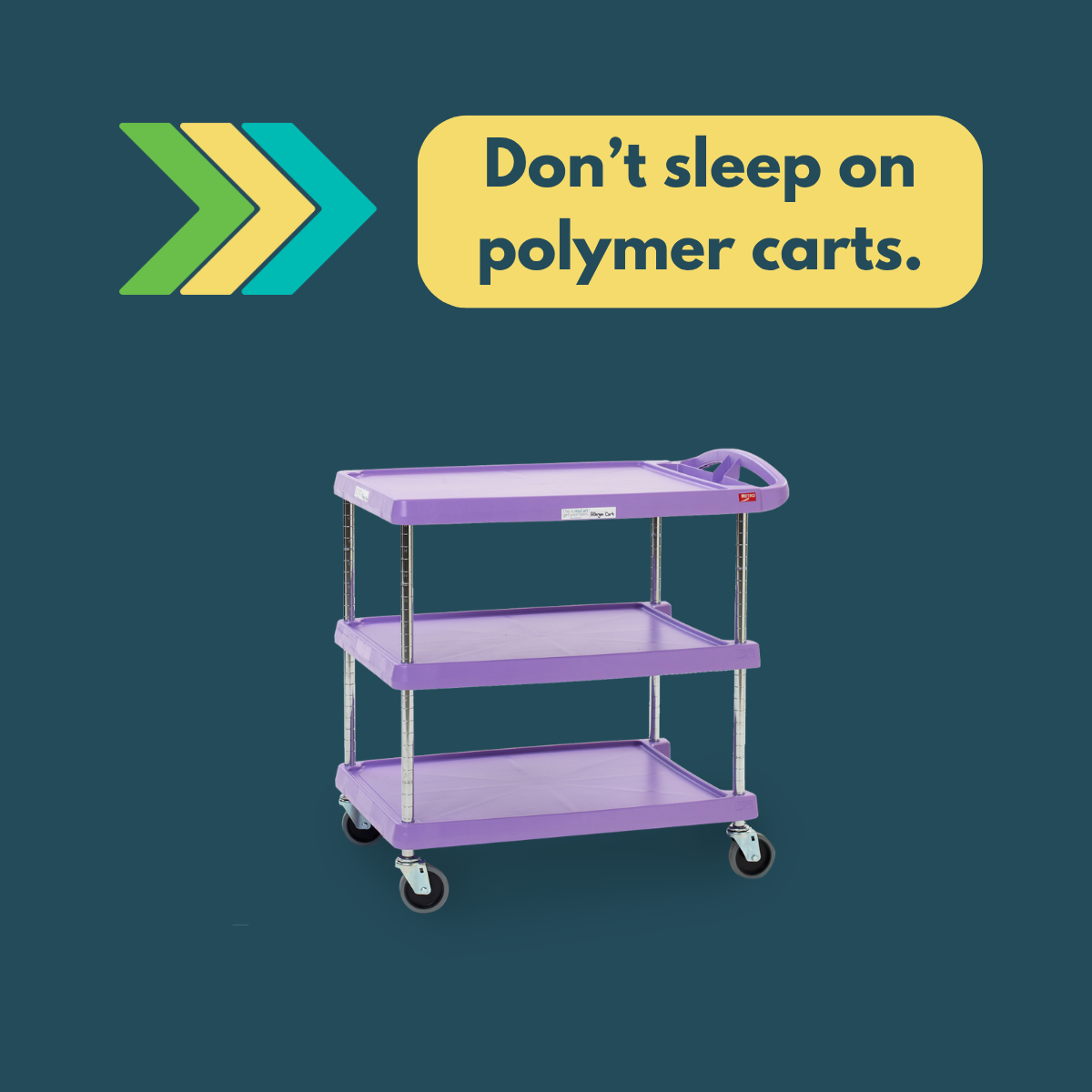
Polymer utility carts, like Metro’s myCart and deep ledge designs, rarely make it onto a shortlist, usually just because people haven’t looked. They tend to cost less than their steel counterparts, which alone is worth a second look on a budget-conscious project.
Cost isn’t the only upside. Polymer carts are often built with ergonomics steel carts weren’t designed around. Improved handles make them easier to steer through a busy hallway. Knee wells built into the bottom shelf mean staff aren’t banging their shins every time they get close to restock. Some models offer height adjustability, so the same cart can work across different tasks or different-sized staff instead of forcing everyone to adapt to it.
Where this actually matters
None of this means steel is wrong or polymer is always right! It simply means the choice deserves an actual comparison instead of a reflex. A code cart pushed at speed down a corridor has different needs than a utility cart parked in a supply room most of the day. The team using it every shift, not the spec sheet, should decide which tradeoffs are worth making.
Our take
We love Lakeside. Even still, the next time “just get a Lakeside” comes up in a planning conversation, it’s worth pausing. Ask what the cart needs to survive, who’s pushing it, and how often. Sometimes steel really is the right call. Other times, a lighter, cheaper, more ergonomic option has been sitting there the whole time, waiting for someone to ask a different question.
If you’re weighing utility cart options for an upcoming project, we’re happy to walk through what’s actually available beyond the name everyone defaults to.